
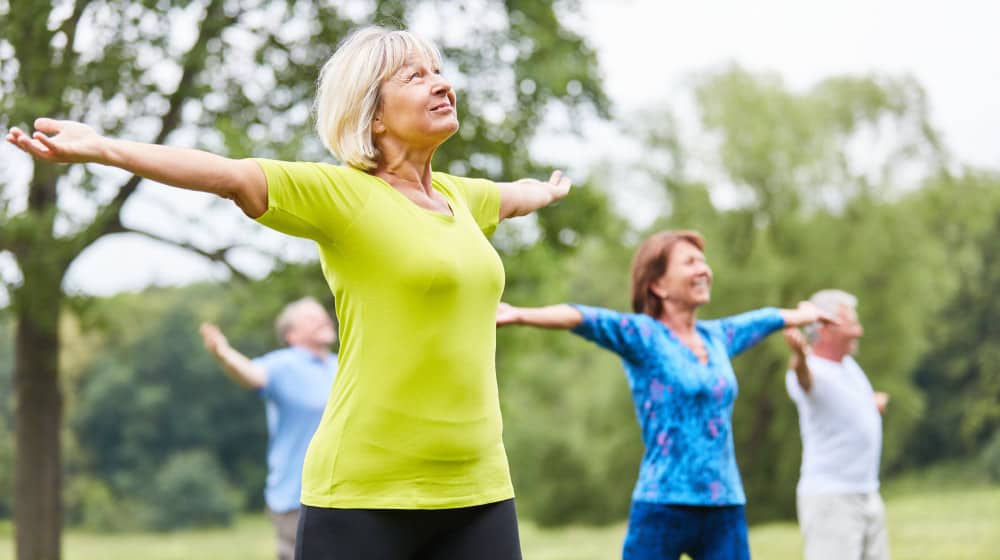

Upper body stretches help older adults stay mobile, ease stiffness, and maintain the flexibility they need for daily routines. When shoulders and arms stay strong and limber, it’s easier to handle simple motions, like putting on a sweater, reaching for a shelf, or getting in and out of a car.
The six stretches below are gentle, seated- or standing-friendly, and require no special equipment. Each one includes a quick note on what it supports and who it’s especially helpful for, so you can guide your parent or grandparent toward movements that match their energy, routine, or mobility level:
- neck side bend and rotation
- shoulder rolls
- hand stretches
- triceps stretch
- arm raises
- side shoulder raises
Let’s start with the ones they can try right at home.
1. Side Bends & Neck Rotations
This stretch is a good fit for seniors who spend time reading, crafting, or using a tablet. It targets the neck and upper shoulders — muscles that often tighten during long periods of sitting or looking down.
- Make sure to sit in a supportive chair with your back straight.
- Gently turn your head to the right and hold for five seconds.
- Return to facing forwards and turn to the left.
- Return to the starting position and tilt your head until your right ear touches your right shoulder.
- Repeat the same movement for the other side.
Your parent can do this seated in any sturdy chair. It’s especially helpful in the morning or before a light walk to reduce tension and improve head mobility.
2. Shoulder Rolls
Shoulder rolls are ideal for older adults who experience stiffness from inactivity or colder weather. This stretch works the deltoids and trapezius — the muscles that support upright posture and shoulder movement.
- Sit in a comfortable position and straighten your back.
- Move both your shoulders in a circular motion.
- Inhale while raising your shoulders and exhale while moving them downwards.
- Harmonize your shoulders and repeat 10-15 times before resting or moving on to the next stretch.
If your mom or dad tends to round their shoulders while watching TV or doing puzzles, shoulder rolls can help reset that posture. They’re also easy to fit in while waiting for the kettle or taking a break from chores.
3. Hand Stretches
Hand stretches are especially useful for older adults managing arthritis or joint stiffness. They support finger, palm, and forearm mobility, important for everyday tasks like zipping a coat, holding utensils, or using a walker.
- You can choose to sit or stand while performing this upper-body exercise.
- Hold both hands and face the palms of your hands downwards in front of you.
- Slowly open, spread your fingers apart, and close them.
- Repeat 10-15 times.
Your parent can do these from a chair or standing near the counter. Repeating the open-close motion encourages circulation and gently warms up smaller joints.
4. Triceps Stretches
This one targets the back of the upper arm — the same area your parent uses when reaching overhead or behind the back. It’s a simple way to improve shoulder flexibility and ease tightness.
- Start by sitting in a comfortable but supportive position.
- Grab your left shoulder and slowly pull it towards the left with your right hand.
- Add support to your right elbow by using your left hand.
- Pull it until you feel resistance and hold it for 10 or 15 seconds.
- Repeat for the other side and repeat ten times for each side.
All it takes is a stable chair and a few slow reps on each side. If your parent has trouble reaching up to fix a collar or grab something from behind, this stretch helps make that motion smoother.
5. Arm Raises
Raising both arms above the head works the shoulders and upper back in one motion. It helps maintain the kind of mobility seniors need to reach into cupboards or lift lightweight items.
- Stand with relaxed shoulders and arms on both sides.
- Lifting both arms above your head as you inhale.
- Return both arms to the starting position.
- Repeat 10 times for both arms.
Have them start with relaxed shoulders and take a deep breath as they lift. The stretch can be a good midday reset or part of a regular morning routine.
6. Side Shoulder Raises
Side raises are a smart pick for seniors working to rebuild shoulder strength or muscle tone. They activate the deltoids, the muscles your parent or grandparent uses when holding a shopping bag or adjusting a pillow behind their back.
- Start by standing or sitting and hold light dumbbells in each hand.
- Slowly lift both arms simultaneously until your arms are completely straight.
- Stop when your arms reach the level of your shoulder.
Dumbbells aren’t required. Light water bottles or no weight at all can still provide gentle resistance. Go slow and steady for the best results.
How Can You Help Your Parent Stretch Safely?
Stretching exercises for seniors are generally low risk. But setup and pacing still matter for those with joint pain, fatigue, or reduced mobility. A few small adjustments can make each stretch safer and more effective.
Keep these tips in mind as you guide your parent through a stretching routine:
- start slow and seated if balance is a concern
- avoid bouncing or forcing a stretch past the point of mild tension
- remind them to breathe through each movement
- use a sturdy chair with back support if needed
- keep water nearby and build in rest breaks
- stop if they feel sharp pain, tingling, or dizziness
Stretching doesn’t need to be a full workout. Even five minutes of movement can help maintain flexibility, reduce stiffness, and support better circulation throughout the day.
What Should You Know About Safe Exercise for Seniors?
Helping your parent stay active starts with setting the right pace. A well-matched routine can support balance, strength, and confidence, but only if it works with their current abilities and energy level.
The Centers for Disease Control and Prevention (CDC) recommends that older adults get at least 150 minutes of moderate-intensity activity each week, along with muscle-strengthening exercises at least twice a week. That can include light walking, stretching, or group programs like water aerobics for seniors.
Consistency matters more than intensity. Building movement into a daily rhythm—through stretching, walking, or light exercise—helps support mobility over time without overwhelming your parent’s system.
Schedule a Tour at 12 Oaks Senior Living
Daily wellness activities are part of life at every 12 Oaks community. From guided movement classes to personalized care plans, we support residents at every stage of aging—gently, respectfully, and with room to grow.
To explore our wellness programs and see how we support mobility and independence, schedule a tour at the 12 Oaks community nearest you.