
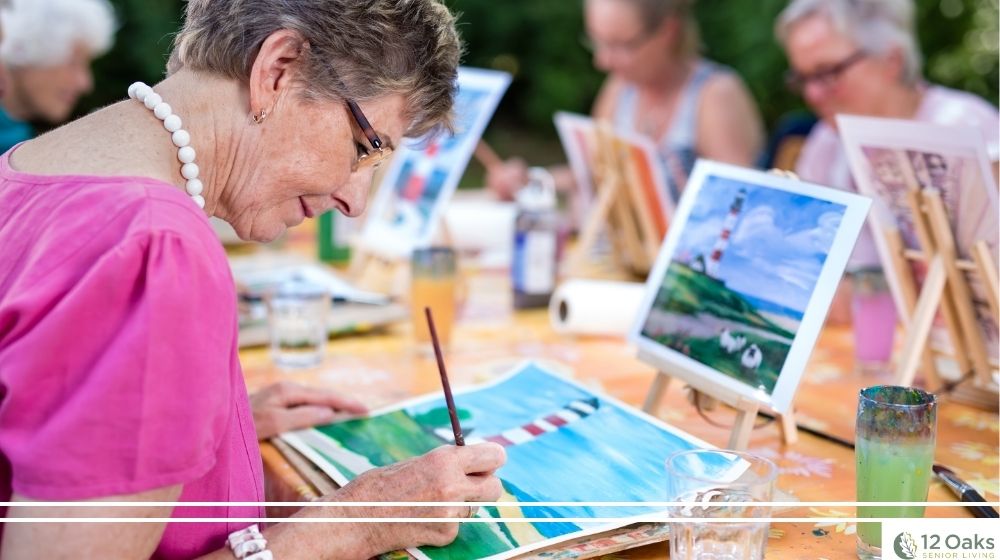

Art therapy gives seniors a way to ease stress, lift mood, and keep the mind active through simple creative activities. No one has to be an artist to enjoy it — a paintbrush, a set of pastels, or even colored pencils can do the job.
Around the table, residents might paint a memory, piece together a collage, or decorate cards for family. The focus isn’t on talent but on how the activity makes them feel: calmer, more confident, and more engaged with the day.
In many assisted living communities, art therapy sessions are part of the regular calendar. These programs give seniors chances to explore new projects, try ideas adapted to their abilities, and share the experience with neighbors.
This guide explains what art therapy is, the benefits it brings, and the kinds of activities seniors can try both at home and in a community setting.
What Is Art Therapy for Seniors?
Art therapy uses painting, drawing, sculpting, or other creative work to support health. A licensed therapist may lead the session, but seniors can also take part in projects guided by activity staff. The goal is to ease worry, keep the mind busy, and give a gentle way to share feelings.
In a community, art therapy usually shows up right on the calendar. A watercolor class on Tuesday, a clay session on Thursday, or a collage group over the weekend.
It helps with healthy aging, lowers the risk of isolation, and brings back hobbies that may have been left behind. Picking up a paintbrush, molding clay, or piecing together a collage can feel simple, but those small actions build confidence and keep a sense of purpose.
Doctors who study aging often use art therapy as part of their work.
Research shows it can help with conditions like dementia, but it also supports seniors who just want to stay sharp and independent.
What Are the Benefits of Art Therapy for Seniors?
Art therapy keeps the mind active, builds confidence, eases depression, and helps seniors stay engaged with daily life.
1. Stronger memory and mental function
Art therapy keeps the brain active through color, pattern, and creative problem-solving.
Studies show that longer, guided sessions improve memory and attention, while movement-based art like dance strengthens body awareness and coordination.
2. Healthier self-image and sense of purpose
Creating art gives seniors a chance to see themselves in a new light. Painting, sculpting, or even music therapy can bring back memories, highlight personal achievements, and offer space to reflect on past experiences.
These activities build confidence, improve quality of life, and give residents a renewed sense of purpose that makes each day feel more meaningful.
3. Lower depression and steadier mood
Art therapy can lighten heavy days. Putting a brush to paper or shaping clay gives seniors a safe way to let feelings out without needing the right words. Over time, these sessions help ease depression and keep new symptoms from setting in.
4. Social ties that keep seniors engaged
Group art activities create natural opportunities to meet others and build friendships. Sitting together to paint, collage, or craft adds enjoyment to the day and fosters a sense of belonging.
Research shows that seniors who take part in regular creative programs report better overall well-being, more energy, and a stronger sense of community.
Art Therapy Ideas for Seniors
You don’t need a full studio to get started. A small table, some supplies, and a little time can turn into something meaningful for your parent or grandparent.
Easy art and craft projects at home
Simple projects work best when you want your parent to relax at home. A brush, some paper, or a few photos to cut and paste are often all it takes.
- Painting or coloring with watercolor, acrylics, or pencils
- Collage, scrapbooking, or decorating postcards
- Mandalas, patterns, or coloring books
- Knitting or crochet with soft, easy-to-handle yarn
- Simple jewelry-making with beads or string
- Decorating photo frames or keepsake boxes
- Making greeting cards for birthdays and holidays
Creative expression in community or assisted living
Your mom or pop might sit in on a memory journal group, join a mural project, or try their hand at sculpting clay. Simple yet lively sessions like these make the day feel full.
- Memory journals, portrait painting, or group murals
- Clay sculpting, pottery, or working with air-dry clay
- Nature art with leaves, flowers, or stones
- Mixed media projects that layer paint, fabric, and photos
- Music and art sessions, like painting while listening to songs
- Themed seasonal projects, such as holiday crafts or spring flower painting
- Storytelling with art, like illustrating a favorite memory or family story
Adapted ideas for physical or cognitive limitations
Not every senior can hold a thin brush or follow an open-ended project. With the right adjustments, they can still take part comfortably.
- Large brushes, thick pencils, and high-contrast paper for vision or grip challenges
- Adaptive tools, such as weighted pens or angled boards for easier movement
- Shorter sessions with simpler materials, always done while seated
- Digital drawing tablets with stylus pens for those who prefer technology
- Pre-drawn templates or guided projects to reduce decision fatigue
- Collaborative projects where caregivers or staff assist with fine details
- Sensory art using textured fabrics, clay, or tactile materials for those with memory loss
Does Medicare Pay for Art Therapy?
Medicare does not cover art therapy on its own. Sessions are only included when they are part of a larger treatment plan, like rehabilitation after surgery or therapy for a diagnosed mental health condition.
For most seniors, art therapy is something families pay for themselves or receive as part of community programming. Assisted living communities often build art classes into the activities calendar, so residents can join without extra cost. Senior centers, libraries, and nonprofit groups may also host free or low-cost sessions.
If your parent wants regular access to art therapy, the best step is to ask providers what’s included. Some communities treat it as part of everyday life, while others may only offer it through special events or outside partnerships.
Art Therapy Supports Healthy Aging
Art therapy keeps older adults involved in daily life. It steadies mood, helps memory, and gives a clear outlet for stress. Seniors don’t need training or talent — just a brush, some paper, or clay in their hands. That’s why communities include it on the calendar each week. It’s simple, reliable, and it works.
FAQ: Art Therapy for Seniors
1. What is art therapy for the elderly?
Art therapy is any creative activity that supports health. It might be painting, drawing, or working with clay. Your parent doesn’t need talent or training. The goal is to lower stress, keep the mind busy, and give a simple way to share feelings.
2. Does Medicare pay for art therapy?
Medicare doesn’t cover art therapy unless it’s part of a bigger treatment plan, like rehab or therapy for a diagnosed condition. For most families, art therapy is either included in the activities calendar at an assisted living community or offered through senior centers and local groups.
3. What are the downsides of art therapy?
The biggest hurdle is access. Not every community has a licensed therapist or regular programs. Some projects can also be tiring if your parent has limited mobility or vision. With the right tools — bigger brushes, shorter sessions, and some staff support — most seniors can still join in and enjoy it.
Life at 12 Oaks Senior Living
Life here feels familiar. Residents wake up in their own space, share meals with neighbors, and take part in activities that make each day feel full. Art sessions are part of the calendar, along with everything else that keeps routines steady and safe.
Families see care when it’s needed, independence when it’s possible, and a community that feels like home.
Find our senior living communities in:
- Arizona
- Kansas
- Massachusetts
- Nebraska
- Oklahoma
- Texas
- Utah
- Wisconsin
Schedule a visit and see how life at 12 Oaks feels in person.