
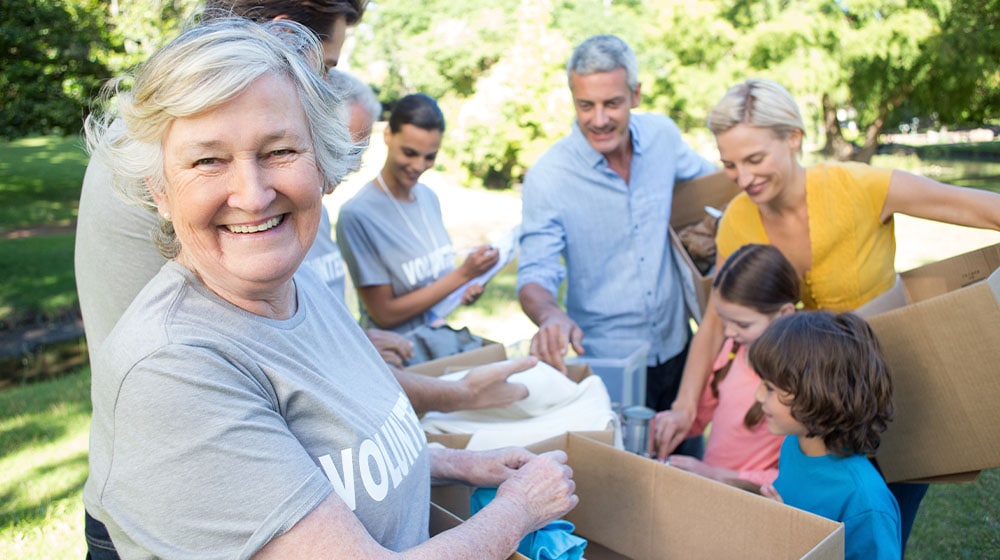

Volunteering opportunities for seniors keep them active, draws them into daily routines, and lets them share the skills and stories they’ve built over a lifetime. Retirement opens space, but that space still needs purpose. And the right role can bring fresh energy and steady social contact to the week.
Studies show that seniors who volunteer enjoy better health outcomes, including stronger memory, lower stress, and even improved heart health. The activity can be light — helping at a library desk, mentoring a student online, or sorting food donations — but the effect runs deep.
If mom or pop are looking for ways to give back to the community, volunteering offers practical, fulfilling options, keep reading.
What Are the Best Volunteer Opportunities for Seniors?
1. Community food banks
Food banks always need steady hands. Seniors can stand at a table, sort through cans, or hand a bag of groceries to a neighbor. The work is simple, but it carries weight. A morning shift leaves plenty of time to rest in the afternoon, and it puts mom or pop right in the middle of community life.
2. Libraries and tutoring programs
Libraries often look for volunteers to sit with children during story hour, guide a new reader through a book, or help an adult study for a test. The setting is quiet, the pace is calm, and the conversations keep the mind working. It’s the kind of role that fits easily into a week without wearing anyone out.
3. Animal shelters
Some seniors enjoy walking dogs around the yard. Others prefer sitting in a chair with a cat in their lap. Staff usually have a list of jobs to match different abilities, from filling food bowls to folding laundry. For animal lovers, the time goes by quickly.
4. Local hospitals or senior centers
Hospitals and senior centers often greet volunteers with a name badge and a smile. Tasks range from showing visitors where to go, to leading a bingo game, to simply keeping someone company. Shifts run just a few hours, and there’s staff support nearby. Many seniors find it satisfying to be part of a team again.
5. Faith-based groups
Churches and synagogues often run food drives, clothing closets, or holiday events. Seniors can hand out plates at a fellowship dinner, pack bags for outreach, or help organize donations. The setting feels familiar and the work brings a sense of belonging that many families appreciate.
6. Mentoring or skills-sharing programs
Years of work and hobbies add up to valuable experience. Seniors can mentor a teen who needs direction, help a young neighbor with job applications, or show a community group how to knit, cook, or fix a chair. The conversations build naturally, and the sense of passing something on gives the day extra meaning.
7. Remote or virtual volunteering
For those who prefer to stay home, plenty of options exist online. Seniors can tutor a student over video call, answer phones for a helpline, or type up notes for a nonprofit. It keeps them connected, gives structure to the week, and works well when driving or mobility is a challenge.
Where Can Seniors Find Volunteer Programs Near Them?
Community centers, national programs, and even church bulletin boards often post simple ways to get involved. Online boards also make it easy to match skills and schedules. A few of the most common starting points are:
- Local community centers: Stop by the front desk or check the monthly calendar. Community centers often post openings for class helpers, activity support, or event volunteers.
- AARP Experience Corps: This program pairs older adults with children who need reading support. Training is provided, and schedules are flexible.
- RSVP (Retired & Senior Volunteer Program): RSVP matches seniors with opportunities in their own communities. Options range from clerical work to friendly visiting, with roles chosen to fit each person’s ability and time.
- Neighborhood bulletin boards and churches: A flyer on the bulletin board or an announcement at church often points to simple, local needs, like meal deliveries, clothing drives, or outreach visits.
- Online volunteer boards (VolunteerMatch, United Way): These sites list thousands of opportunities, including virtual roles for those who prefer to volunteer from home. Sign-up is straightforward, and filters make it easy to find a good fit.
What Are the Benefits of Volunteering for Seniors?
Volunteering matters because it helps seniors feel healthier, more settled, and more connected to the people around them. The benefits show up in daily routines and in long-term well-being.
- Improved health and stronger memory: Simple volunteer work, like reading with a child or helping at a food drive, keeps the body moving and the mind active.
- Lower risk of mortality: One study found that seniors who volunteered about two hours a week had a lower risk of dying compared with those who did not.
- Reduced loneliness: Volunteering brings people together. Even a few hours spent with others can replace long stretches of sitting at home alone.
- Stronger sense of purpose: Another study found that seniors who volunteered felt more positive and had a greater sense of purpose, even after big life changes like retirement or losing a spouse.
- Wider support network: Volunteering often brings stronger ties with friends and family, along with more positive daily interactions. Supportive networks help seniors feel more satisfied with life.
Is 80 Too Old to Volunteer?
No. No age is too old to volunteer as long as seniors can move freely, comfortably, and safely.
If a role could put a parent or grandparent at risk of falling, it makes sense to look for options where most of the time is spent seated, like reading to children, greeting visitors, or helping with office tasks. If giving comes naturally and skills are worth sharing, mentoring or teaching can be a perfect fit.
Giving Time Gives Life Shape
Volunteering doesn’t have to be grand to matter. A steady role, whether reading once a week or lending a hand at a community meal, adds shape to the week and meaning to the day.
Seniors who give their time often find they gain something in return: routine, purpose, and new connections that keep life moving forward.
FAQ: Volunteering for Seniors
1. Where are volunteers needed the most?
Community food banks, hospitals, and schools often need the most help. These places rely on steady volunteers to keep programs running, and many roles work well for older adults.
2. What organization provides volunteer opportunities to Americans aged 55 and older?
RSVP, the Retired and Senior Volunteer Program, connects people 55 and older with local opportunities. Roles range from office help to mentoring, and the program matches each volunteer with something that fits their abilities and schedule.
3. Is there an upper age limit for volunteering?
No. As long as seniors can take part safely and comfortably, they can volunteer. Many organizations welcome older adults well into their 80s and 90s, and adjust tasks to match energy and mobility.
Life at 12 Oaks: Community, Care, and Connection
Life at 12 Oaks blends comfort with connection. Residents enjoy private, secure homes alongside shared spaces that bring neighbors together. Thoughtful care, engaging programs, and warm surroundings create a community where families feel confident and seniors feel at home.
Find our senior living communities in:
- Arizona
- Kansas
- Massachusetts
- Nebraska
- Oklahoma
- Texas
- Utah
- Wisconsin
Schedule a tour to experience what makes 12 Oaks a place to live fully and thrive.