
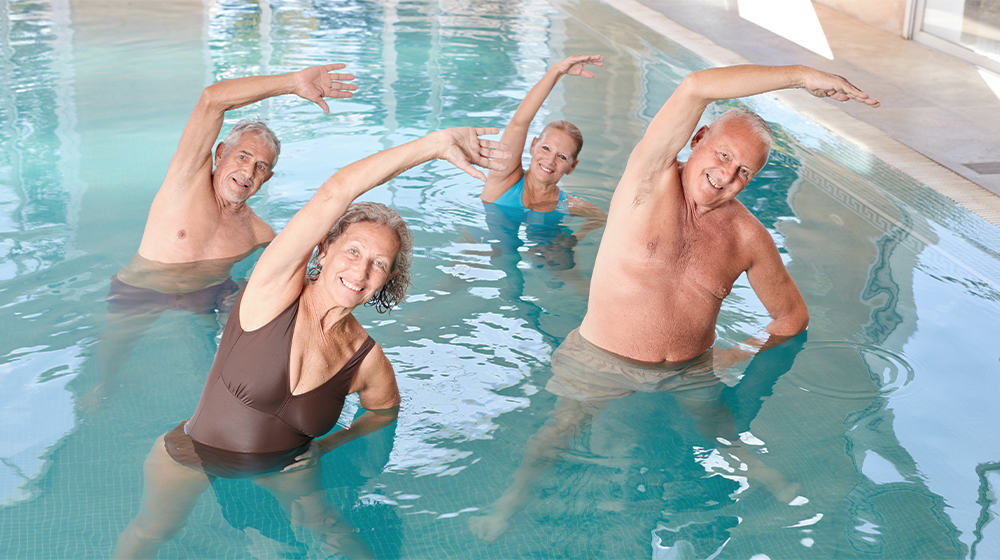

Lap swimming, water aerobics, and pool workouts with foam weights or kickboards all offer seniors an easy, joint-friendly way to stay active. These exercises support heart health, improve balance, and build strength without adding stress to the joints like land-based workouts often do. Swimming is also ideal for all fitness levels, even for those who weren’t active in their younger years. It’s one of the safest, most effective ways for older adults to move their bodies. Water jogging, for example, offers the benefits of running with far less impact.
This guide covers everything seniors and their families need to know, including beginner workouts, helpful tips, and why swimming continues to be one of the best full-body workouts for older adults.
What Are the Best Swimming Workouts for Seniors Over 60?
Swimming for seniors involves no pressure, no harsh impact, and no fear of falling. For older adults with arthritis, balance issues, or past injuries, the water is a gentle workout partner and makes movement possible again.
- Water Walking or Jogging
Moving through chest-deep water takes more strength than it looks. Each step pushes against resistance while the water supports the body’s weight.
Seniors can walk laps, march in place, or swing their arms to work on balance, posture, and muscle control without stressing knees, hips, or ankles.
- Lap Swimming for Seniors
Laps give seniors a chance to build endurance at their own pace. Even a few easy laps help improve breathing, coordination, and muscle tone. For older adults who haven’t been active in years, swimming often feels like rediscovering what their body can still do.
- Aqua Aerobics
Music, movement, and a social atmosphere keep seniors engaged. These classes use big arm sweeps, leg lifts, and core twists to build stamina without overloading the joints.
For someone with arthritis or limited mobility, the warm water adds comfort while the rhythm keeps them going.
- Pool Exercises with Equipment
Foam dumbbells and kickboards create resistance, turning basic motions into gentle strength training. Seniors can hold onto the wall for leg kicks or use noodles for upper-body moves. Mom and pop can workout specific muscle groups without ever stepping inside the gym.
- Floating, Stretching, and Cool-Downs
Floating offers freedom seniors don’t always feel on land. A few minutes of easy movement lets them swing their arms, twist their backs, or even sway side to side without fear of falling.
The buoyancy lifts the pressure off their joints, while the water’s resistance adds just enough effort to build real strength.
Swimming Tips for Seniors Just Getting Started
Most seniors don’t need convincing that swimming is good for them. What they need is a way to start that feels doable, comfortable, and safe.
- Start with short swims a few times a week
Two or three 15–30 minute sessions can go a long way. Pushing too hard early on often leads to soreness or burnout. Consistency builds comfort, and comfort leads to results.
- Warm up before swimming and cool down after
Have your parent or grandparent walk slowly through the shallow end or hold the edge and kick for a few minutes. Movements should feel natural and relaxed, like loosening up the body for a walk. After swimming, floating or light stretches in warm water help prevent tightness.
- Use swim gear that adds comfort and confidence
Many older adults feel unsure about their footing or vision in the pool. Well-fitted water shoes help with traction, and anti-fog goggles make it easier to see underwater. A simple flotation belt or noodle can make nervous swimmers feel steady without limiting movement.
- Hydrate and protect against sun exposure
Dehydration is common, especially in seniors who take medications that affect fluid balance. Encourage water before and after swimming.
For outdoor pools, a wide-brim hat and swim shirt offer better protection than sunscreen alone.
- Stick to familiar routines and swim times
Swimming at the same time of day, in the same pool, builds confidence. Early mornings or midday are often best — quieter pools, fewer distractions, and better energy levels for most seniors.
- Use visual markers for orientation in the pool
Some seniors feel disoriented in large or echo-filled pool spaces. Ask staff to mark the end of the lane with a bright cone or towel, or have mom or pop count strokes between turns. These small cues help prevent confusion.
- Take breaks before fatigue sets in
Encourage short breaks between sets of movement even though they don’t feel any soreness. Sitting on the pool steps, holding the edge, or doing light stretches gives muscles time to recover and helps your parent stay relaxed.
- Focus on posture and slow, controlled movement
Remind them to pull their shoulders back and engage their core even in the water. Fast, splashy movements don’t offer the same benefit as slower, full-range ones.
- Practice shallow-end drills before going deeper
If they’re new to swimming, keep them in water where they can stand. Practice kicks, arm sweeps, and walking drills before attempting laps.
- Ask for help when something feels off
Every pool should have someone nearby to assist, but not every senior will speak up. Check in often, especially if they seem tired, unsure, or overwhelmed. Water safety starts with good communication and a willingness to take things one step at a time.
Swimming Tips for Seniors with Arthritis or Limited Mobility
Pool workouts aren’t just possible for seniors with arthritis — they’re often the most effective. Warm water reduces joint pain, while slow, supported movement helps improve range of motion without causing flare-ups.
Try these practical tips from coaches who work with older adults every day:
- Use the shallow end so feet stay grounded while joints stay supported
- Skip the freestyle stroke if shoulders feel stiff — try backstroke or water walking instead
- Hold the pool wall for side leg lifts or calf stretches that target hips and knees
- Keep movements slow and wide to reduce pressure and improve flexibility
- Try walking sideways to work hips and stabilizer muscles gently
- Avoid fast turns or jerky motions — smooth transitions protect inflamed joints
- Choose warm-water pools (around 88–92°F) when possible for added relief
- Always listen to the body — movement should feel freeing, not forced
Even five minutes of gentle exercise can loosen up stiff joints and help seniors feel more in control of their body again.
Why Swimming Is Good Exercise for Older Adults
Swimming checks every box for older adults: gentle on the body, easy to start, and powerful enough to make a difference. It’s one of the few workouts that helps seniors stay strong, steady, and calm, all in one session.
- Buoyancy reduces joint pain and improves mobility
The water carries some of the body’s weight, which helps sore knees, hips, and backs move with less pressure. Seniors with arthritis or past injuries often find they can walk, twist, or lift their arms in the pool when those same movements feel too painful on land.
- Regular swimming builds heart strength and lung capacity
Even light swimming improves circulation and helps older adults breathe deeper and move longer. It’s a smart way to support cardiovascular health without overloading the system — especially for those managing high blood pressure or heart conditions.
- Pool exercises help improve balance and lower fall risk
Every step in water forces the body to adjust, stabilize, and stay upright. This trains the same muscles seniors use to stay steady on land. And since the water catches any misstep, there’s no fear of falling during practice.
- Water resistance builds strength without impact
Pushing against the water — even with slow movements — works the arms, legs, and core more than most people expect. The difference is, there’s no pounding, no harsh landings, and no need for machines or weights.
- Swimming lifts mood and calms the nervous system
Physical activity triggers endorphins, and swimming is one of the easiest ways for older adults to get those feel-good chemicals flowing. The water adds comfort, but it’s the movement itself that lifts the mood. Many seniors leave the pool feeling calmer, more focused, and better able to handle the rest of the day.
FAQ: Swimming for Seniors
1. Is swimming good for 70‑year‑olds?
Absolutely. Swimming boosts cardiovascular health, strengthens muscles, and improves balance with minimal joint stress.
2. Which swimming stroke is best for seniors?
Backstroke and breaststroke top the list. Both strokes keep the head above water, reduce neck strain, and require slow, full-body engagement. Freestyle can help with endurance but may aggravate sore shoulders. Water walking and gentle stroke drills often work even better for seniors managing injuries or stiffness.
3. How often should seniors swim?
Most older adults do well with around 30 minutes of swimming most days of the week. The Centers for Disease Control and Prevention (CDC) suggests aiming for 150 minutes of moderate activity weekly, which can include time in the pool. Two sessions focused on strength or balance, like pool resistance work or light leg drills, round out a well-balanced routine.
A Lifestyle That Makes Movement Feel Easy
Staying active after 60 doesn’t have to mean structured workouts or strict routines. For many older adults, the pool becomes a place to move freely, feel strong again, and enjoy the kind of exercise that feels less like a chore and more like part of daily life.
That’s the kind of lifestyle we build at 12 Oaks.
Movement blends into the rhythm of the day through group classes, guided wellness programs, and the quiet joy of choosing how to stay active. There’s no pressure. Just the right support, the right environment, and the freedom to keep moving.
Want to see how active aging feels at 12 Oaks? Let’s talk.