
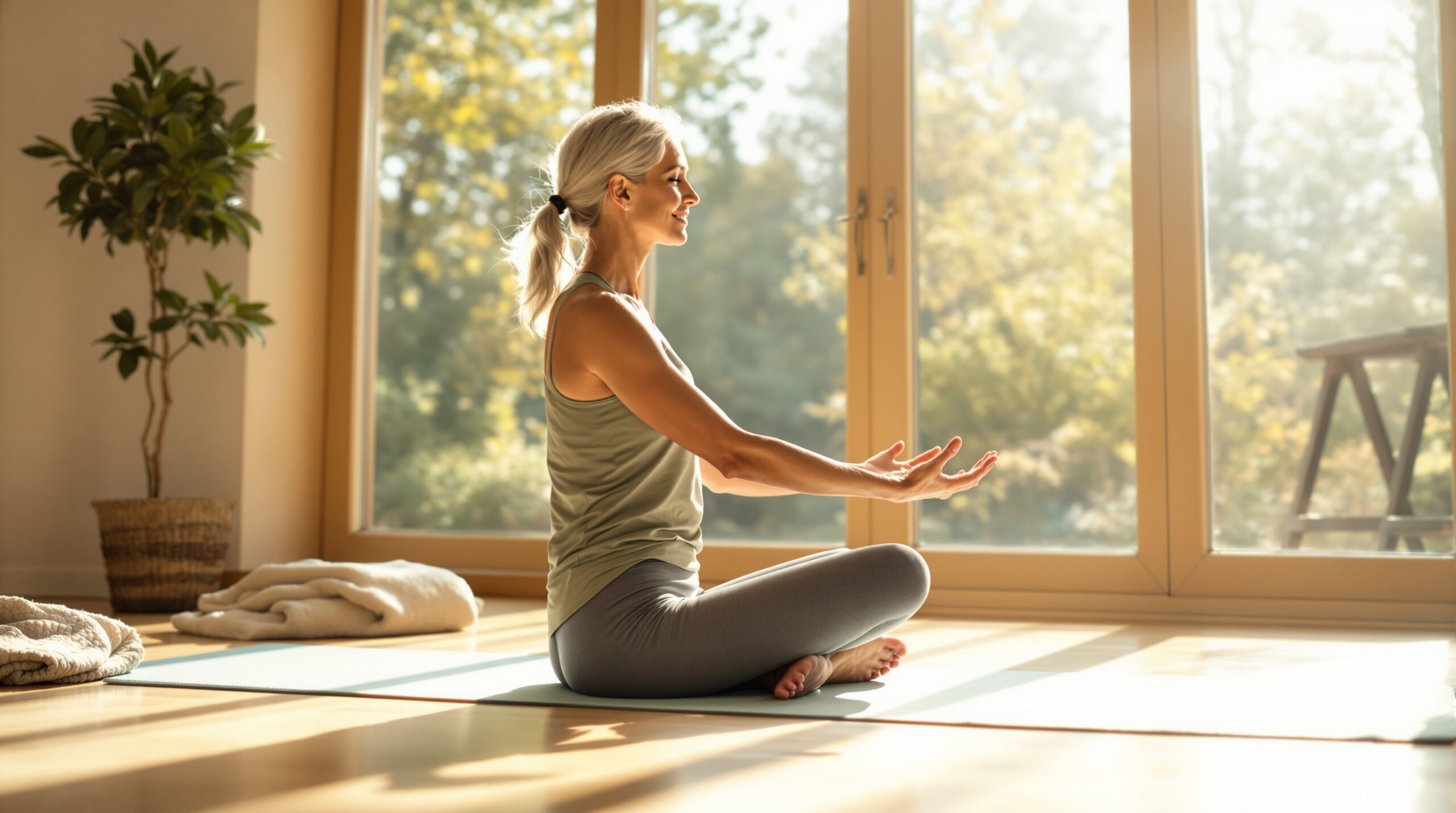

Movement is medicine, and you don’t need to run marathons or lift heavy weights to reap the rewards. For older adults, gentle practices like yoga and stretching offer a path to better flexibility, reduced pain, improved balance, and a calmer mind. The best part? These practices can be adapted to any fitness level, whether you’re highly active or working with limited mobility.
If you’ve been curious about yoga or want to start a daily stretching routine, this guide will help you get started safely and confidently.
Why Gentle Movement Matters
As we age, our muscles naturally lose elasticity, our joints become stiffer, and our range of motion decreases. These changes can lead to discomfort, reduced mobility, and a higher risk of falls, the leading cause of injury among adults over 65, according to the CDC.
Regular stretching and gentle yoga counteract these effects by:
- Increasing flexibility and joint range of motion
- Strengthening muscles that support balance and posture
- Reducing chronic pain, particularly in the back, hips, and knees
- Improving circulation throughout the body
- Lowering stress and anxiety through mindful breathing
- Enhancing sleep quality
A 2023 study in BMC Geriatrics found that older adults who practiced yoga twice a week for 12 weeks showed significant improvements in balance, flexibility, and self-reported quality of life.
Getting Started: Essential Principles
Listen to Your Body
The most important rule of gentle movement is to never push through pain. Discomfort and pain are different. A mild stretch sensation is normal, but sharp or stabbing pain is a signal to stop.
Breathe Deeply
Deep, steady breathing is the foundation of both yoga and stretching. Inhale slowly through your nose, expanding your belly, and exhale gently through your mouth. This rhythm helps relax muscles and calm the nervous system.
Start Slowly
If you’re new to yoga or stretching, begin with just 10 to 15 minutes per day. Gradually increase the duration and complexity as your body adapts.
Use Props
Don’t hesitate to use chairs, blocks, straps, or cushions to support your practice. Props aren’t a sign of weakness. They’re tools that make movement safer and more accessible.
Chair Yoga: Perfect for Beginners
Chair yoga is an excellent entry point for seniors who want the benefits of yoga without getting down on the floor. All poses are performed while seated or using the chair for support.
Seated Cat-Cow
- Sit tall in your chair with feet flat on the floor
- On an inhale, arch your back gently and lift your chest (cow)
- On an exhale, round your spine and tuck your chin (cat)
- Repeat 5 to 8 times, moving slowly with your breath
Seated Side Stretch
- Sit tall and raise your right arm overhead
- Gently lean to the left, feeling a stretch along your right side
- Hold for 3 to 5 breaths, then switch sides
Seated Twist
- Sit tall with feet flat on the floor
- Place your right hand on the outside of your left knee
- Gently twist your torso to the left, looking over your left shoulder
- Hold for 3 to 5 breaths, then switch sides
Standing Stretches (With Support)
These stretches can be done while holding onto a countertop, wall, or sturdy chair for balance.
Calf Stretch
- Stand facing a wall with your hands at shoulder height
- Step one foot back, keeping it straight with the heel on the floor
- Lean gently forward until you feel a stretch in your calf
- Hold for 20 to 30 seconds, then switch legs
Hip Opener
- Stand behind a chair, holding the backrest for support
- Lift one knee to hip height and gently rotate it outward
- Hold for 10 to 15 seconds, then lower and switch sides
Standing Forward Fold (Modified)
- Stand with feet hip-width apart, holding the back of a chair
- Slowly hinge at your hips, walking your hands down the chair
- Let your head hang gently and breathe into the stretch
- Hold for 15 to 20 seconds
A Simple Daily Stretching Routine
This 15-minute routine can be done every morning to start your day feeling limber and energized:
- Neck rolls. Slowly rotate your head in gentle circles (1 minute)
- Shoulder shrugs. Lift and lower your shoulders with breath (1 minute)
- Seated cat-cow. Move through 8 to 10 rounds (2 minutes)
- Seated side stretches. Hold each side for 5 breaths (2 minutes)
- Seated twists. Hold each side for 5 breaths (2 minutes)
- Ankle circles. Rotate each foot in both directions (1 minute)
- Wrist and finger stretches. Open and close hands, rotate wrists (1 minute)
- Standing calf stretch. Hold each side for 30 seconds (1 minute)
- Deep breathing. Close your eyes and take 10 slow, deep breaths (2 minutes)
Finding a Class
Many options are available for seniors who prefer guided instruction:
- Community senior centers often offer free or low-cost yoga classes
- YouTube features thousands of free chair yoga and senior stretching videos
- Local yoga studios may offer adaptive or gentle classes for older adults
- Senior living communities frequently include yoga and movement programs in their activity calendars
When choosing a class, look for instructors with experience teaching older adults and always inform your instructor about any health conditions or limitations.
The Gift of Movement
Gentle movement isn’t about achieving perfect poses or touching your toes. It’s about honoring your body, finding ease in everyday motion, and cultivating a practice that brings you peace. Even a few minutes of stretching each day can transform how you feel, physically, mentally, and emotionally.
At 12 Oaks Senior Living, we believe in the power of movement at every age. Our communities offer yoga, tai chi, and stretching classes as part of our holistic approach to wellness. Whether you’re a seasoned yogi or a complete beginner, there’s a place for you to move, breathe, and thrive.